


"Energy, Economy & Elon: Your Quick Catch-Up"
- Jemima Asegieme
- Jun 4, 2025
- 5 min read

4th June 2025
Elon Musk’s not holding back—he just ripped into Trump’s big spending bill, the Bank of England is playing it safe on rate cuts amid global jitters, Meta’s going nuclear (literally) to power its AI data centers, and Wells Fargo just got a green light to grow again after years under
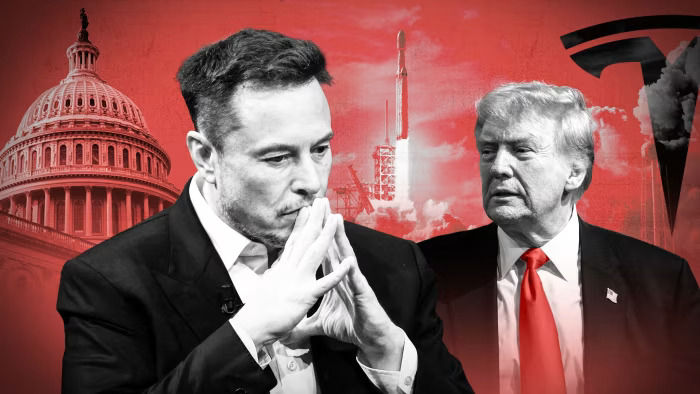
Musk Blasts Trump-Backed Tax and Spending Bill as GOP Divides Deepen
Elon Musk made waves on Tuesday by slamming President Donald Trump’s signature tax and spending proposal, calling it a “disgusting abomination” in a social media post. The Tesla and SpaceX CEO took aim at what he described as a “pork-filled” bill that would significantly increase the federal deficit—echoing concerns already voiced by some fiscally conservative Senate Republicans. The bill, passed by the House last month by a single vote, would extend Trump’s 2017 tax cuts and boost military and border spending, adding an estimated $3.8 trillion to the national debt.
The Senate is expected to take up the bill, known as the “One Big Beautiful Bill Act,” in the coming weeks. While Republican leadership is aiming for passage by July 4, internal disagreements may complicate the path forward. Senate Republicans are split, with deficit hawks demanding deeper spending cuts and others focused on protecting rural healthcare programs like Medicaid. Some lawmakers also want to delay Trump’s proposals on tax breaks for tips and overtime to make room for broader cost-saving measures.
Musk’s public criticism presents a unique challenge to Trump’s influence. Although Musk recently stepped down from a special advisory role in the administration, he has been a major political donor—contributing nearly $300 million to Trump and Republican candidates in the last election cycle. His latest comments come just as GOP leaders, including Senate Finance Committee members, prepare to meet with Trump to discuss locking in permanent business tax breaks—a move analysts warn could further inflate the bill’s cost.
Despite the pushback, Republican leaders are standing firm. Senate Majority Leader John Thune defended the legislation and dismissed Musk’s remarks, while House Speaker Mike Johnson simply said, “my friend Elon is terribly wrong.” Meanwhile, the White House brushed off the criticism, affirming the president’s commitment to the bill. Still, with at least four Senate Republicans demanding changes to address the growing debt, and only a slim margin for defections, the bill’s fate remains uncertain in the weeks ahead. Bloomberg
BoE’s Bailey Reaffirms Cautious Approach Amid Global Uncertainty
Bank of England Governor Andrew Bailey has reaffirmed his “gradual and careful” stance on interest rate cuts, citing growing global uncertainty—particularly around U.S. trade policy—as a key factor clouding the economic outlook. Speaking to Parliament’s Treasury Committee, Bailey noted that while the direction for rates is still likely downward, the pace and depth of cuts are now much less certain. The BoE lowered rates last month to 4.25% in a divided vote, warning of market instability. Bailey said he was unsurprised by April’s inflation jump to 3.5% and highlighted that further loosening in the labour market—especially cooling wage growth—would be crucial for additional cuts.
While economists had previously expected the BoE to trim rates steadily throughout the year, markets are now pricing in just one more cut by December, with no clear view beyond that. Deputy Governor Sarah Breeden, who backed last month’s cut alongside Bailey, told lawmakers she would have supported the move even without trade concerns. Bailey, however, admitted he was more hesitant going into that decision. “You should think of the majority as having a broad church within it,” Breeden said, signaling the diversity of views within the committee.
On the growth front, official data showed a strong Q1 expansion—at odds with more downbeat business surveys. Bailey acknowledged the mismatch and suggested that surveys may be more reliable indicators of future activity. The BoE expects UK growth to slow, projecting just 1% for 2025 and only modest improvement through 2027. Meanwhile, external MPC member Swati Dhingra, who voted for a deeper half-point cut, pointed to evidence of easing inflation pressures in supply chains, contrasting with 2022’s inflation spike.
Other voices on the MPC remain more cautious. Catherine Mann, who opposed cutting rates last month, said the labour market isn’t cooling as expected and urged the BoE to reassess its approach to quantitative tightening—the unwinding of past asset purchases—especially as long-term borrowing costs climb to their highest levels since 1998. Bailey agreed that the recent spike in yields may not be due to QT alone, but acknowledged the need to review its effects amid shifting global dynamics. “We’ll need to look closely at how all these factors interact over the coming months,” he said. CityAM
Constellation Energy Shares Surge on Nuclear Deal With Meta
Constellation Energy shares rose as much as 7% on Tuesday after announcing a 20-year nuclear power agreement with Meta. The deal will support Meta’s growing energy demands driven by its expanding AI data centers. Constellation will boost output at its Clinton nuclear plant in Illinois by 30 megawatts, a move the company says will help preserve 1,100 local jobs. While shares pared gains later in the day, the stock remains up 27% this month following strong Q1 results and recent federal support for nuclear energy.
The agreement, set to begin in 2027, will provide clean power to Meta’s operations in the region, including its DeKalb, Illinois data center. Meta emphasized the need for “clean, reliable energy” to sustain its AI ambitions, as it prepares to spend up to $72 billion in 2025 on data center expansion.
Big Tech is increasingly turning to nuclear power to fuel its AI growth. Microsoft signed a major deal with Constellation last year to reopen Three Mile Island, which could bring in $785 million annually by 2030. Amazon acquired a nuclear-powered data center campus for $650 million, while Oracle is developing its own facility using small reactors.
With energy-hungry AI infrastructure straining local power grids, access to reliable electricity is quickly becoming a bottleneck. As Bank of America’s Vivek Arya put it, power is now just as crucial as chips when it comes to scaling AI. Finance Yahoo
Fed Lifts Asset Cap on Wells Fargo, Marking Major Turnaround for the Bank
Nearly a decade after its fake accounts scandal, Wells Fargo is getting some long-awaited relief. The Federal Reserve has lifted a key restriction—its $1.95 trillion asset cap—signaling confidence in the bank’s progress under CEO Charles Scharf. That cap had been in place since 2018 as part of a broader consent order following revelations of widespread consumer abuses.
“This is a pivotal milestone,” Scharf said, noting that cleaning up past issues has been his top priority since taking over in 2019. Shares of Wells Fargo climbed as much as 3% in premarket trading on the news, extending a 50% gain since Scharf took the helm.
The move frees Wells Fargo to grow its balance sheet, a critical step as it pushes more aggressively into investment banking to compete with giants like JPMorgan and Goldman Sachs. While the asset cap is gone, the Fed made clear that other restrictions from the 2018 enforcement order still stand until the bank meets all remaining conditions.
Scharf has now overseen the removal of 13 regulatory consent orders—seven of them just this year. Still, leadership is tempering expectations. “It’s not a light switch moment,” CFO Mike Santomassimo cautioned earlier this year, emphasizing that any growth will be deliberate and rooted in the bank’s new culture and controls. Finance Yahoo
Minor Headlines
Tariffs Cloud Private Equity Deal Activity in U.S. Financial Times
Private Equity Faces Pressure as Returns Disappoint Limited Partners. Bloomberg
Software Lags as Key Driver in U.S. IPO Market Recovery. Bloomberg
Hedge Funds Retreat from Yen While Asset Managers Hold Steady. Bloomberg
U.S. Life Insurers Shift $800 Billion Offshore Over Five Years. Reuters
Temu's U.S. Daily Users Plunge 58% After Tariff Loophole Closes. Reuters
Uber Reintroduces COO Role After Five-Year Hiatus. Bloomberg
Microsoft Cuts 300 More Jobs, Building on Last Month’s 6,000 Layoffs. Bloomberg
Deutsche Bank Sets Year-End S&P 500 Target at 6,550. Reuters
HPE Delivers Solid Results, Eases Tariff Concerns. Bloomberg
Gen Z Word of the Day
Glow Up
This means a makeover or transformation from bad to good.


Comments